
Who loves doing laundry? Well not a lot of people do. But did you know the average household does 300 loads of laundry per year! That’s a lot of clothes folding. Even worse though. 300 load of laundry roughly equals consuming 10,000+ gallons of water and also releasing microplastics into waterways. We need to find a better way to address this issue because traditional laundry habits are far from planet-friendly. However, the good news is that small changes can turn this boring chore into eco-friendly laundry experience.
In this guide, you’ll discover how to transform your laundry routine with eco-friendly detergents, energy-saving drying methods, and sustainable denim care. Whether you’re a busy parent, a renter, or a minimalist, these swaps will save money, reduce waste, and keep your clothes fresh—without harming the Earth.
*Note: This post contains affiliate links. When you purchase through these links, I earn a small commission at no extra cost to you. This helps support my blog. Thank you!”

Why Switch to Eco-Friendly Laundry?
Before diving into solutions, let’s break down the three biggest problems with conventional laundry:
- Toxic Detergents: Many mainstream detergents contain phosphates, sulfates, and synthetic fragrances, which pollute rivers and harm aquatic life.
- Microfiber Pollution: A single load of synthetic fabrics (like polyester) releases 700,000+ microplastics into water systems.
- Energy Waste: Dryers account for 6% of household electricity use.
Now how do we address is issue? Here’s a three-part eco-laundry system recommendation to you get started:

Photo by Eir Health on Unsplash
Part 1: Eco-Friendly Laundry Detergents
1. Choose Plant-Based or Powder Detergents
Why? Conventional liquid detergents are often packaged in plastic and contain petroleum-based ingredients. Here’s some options:
- Tru Earth Eco Strips (plastic-free, lightweight)
- Dropps Pods (compostable packaging)
- DIY Detergent (1 cup washing soda + 1 cup grated Castile soap + 1 cup baking soda)
2. Skip Fabric Softener (Use Wool Dryer Balls)
Why? Fabric softeners coat clothes in quaternary ammonium compounds (“quats”), which are toxic to marine life. Use this instead:
- Wool dryer balls (add 2-3 to reduce drying time by 25%)
- Vinegar rinse (1/2 cup white vinegar in the rinse cycle softens fabrics naturally).
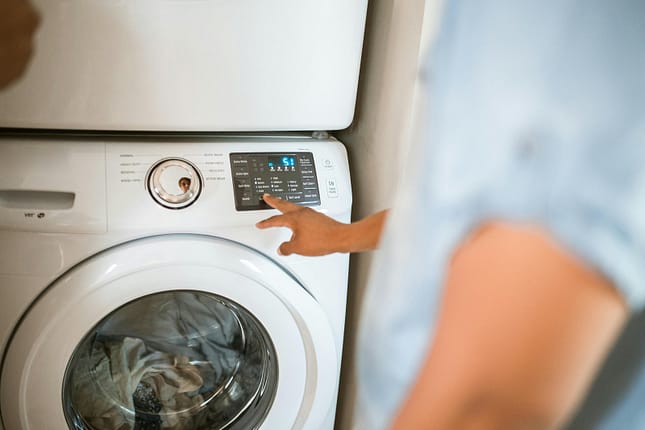
Photo by RDNE Stock project on Pexels
Part 2: Energy-Efficient Washing & Drying
3. Wash in Cold Water
Why? 90% of a washer’s energy goes to heating water (Energy Star). Cold water prevents shrinkage and color fading.
4. Air-Dry When Possible
Why? Line-drying reduces 3 tons of CO2 emissions over the lifetime of a dryer per household. Here’s some pro tips:
- Use a foldable drying rack for small spaces.
- Hang denim inside-out to prevent sun bleaching.
5. Upgrade to a Microfiber Filter
Why? Microfibers from synthetic clothes (yoga pants, fleece) are a major ocean pollutant. Here’s a solution:
- Guppyfriend Washing Bag (traps microfibers)
- PlanetCare Microfiber Filter (attaches to your washer).
Photo by Tima Miroshnichenko on Pexels
Part 3: Sustainable Denim Care
6. Wash Jeans Less Frequently
Why? Denim production uses 3,000+ liters of water per pair. Washing less extends their life.
Pro Tip: Spot-clean with a vinegar-water spray between washes.
7. Use a Denim-Friendly Detergent
Why? Harsh detergents fade indigo dye faster.
Best Pick: Soak Wash (no-rinse formula for dark denim).
8. Repair, Don’t Replace
Why? The fashion industry produces 10% of global carbon emissions. Here’s some ideas for repairing your clothes:
- Patch holes with iron-on denim patches.
- Use visible mending techniques for a trendy look.
- Learn to darn your socks with holes.
Photo by cottonbro studio on Pexels
Bonus: 5 Quick Eco-Laundry Hacks
- Fill the Machine – Running full loads saves water and energy.
- DIY Stain Remover – Mix hydrogen peroxide + baking soda for tough stains.
- Avoid Dry Cleaning – Opt for “wet cleaning” (water-based alternative).
- Reuse Lint – Compost it or use it as kindling (if 100% cotton).
- Buy Secondhand – Thrifted clothes reduce demand for new resources.
Final Thoughts: Small Changes, Big Impact
Switching to eco-friendly laundry habits isn’t about perfection, it’s about progress. Start with one swap (like switching to detergent strips) and build from there. Your clothes, wallet, and the planet will thank you!
Which tip will you try first? Share your sustainable laundry journey in the comments!